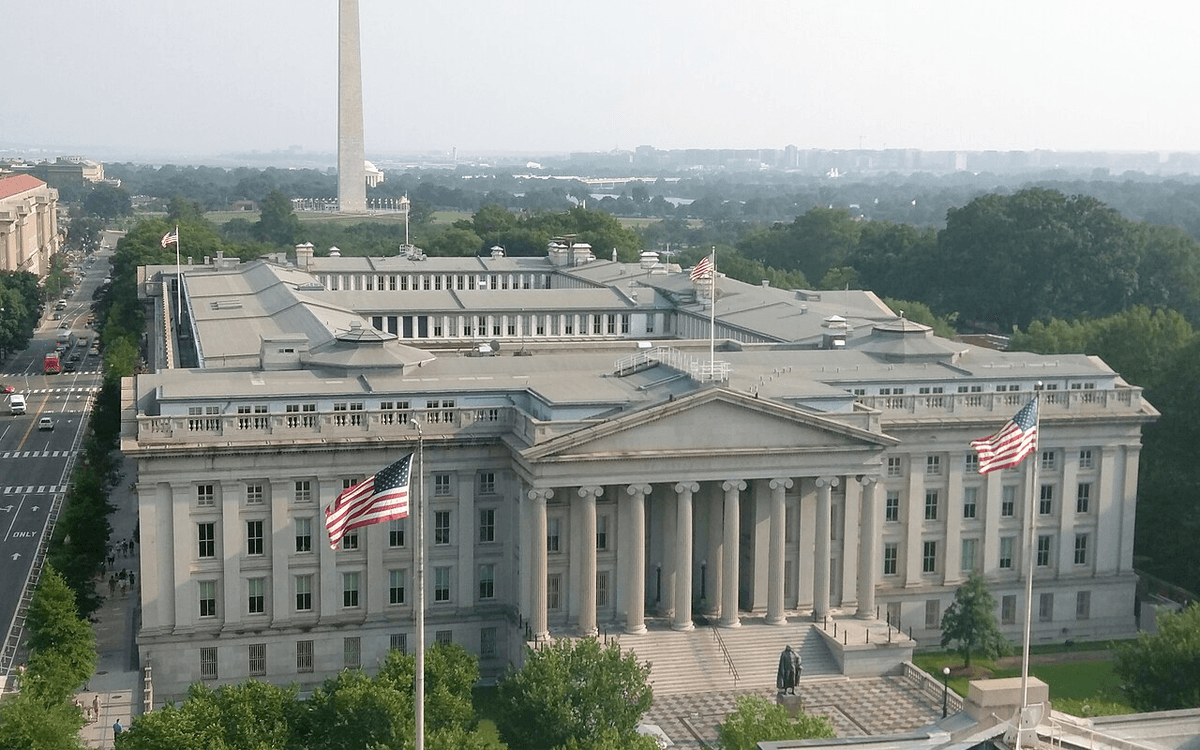
The U.S. Department of Commerce published on 4 November 2026 a finding that removing wind-tower antidumping orders would probably allow dumping to continue or recur. For suppliers in Spain, India and Malaysia, the important question is what this finding actually settles. It answers one part of a two-agency review, rather than establishing a new universal tariff for every shipment. Commerce notice
Commerce's 120-day review tests the removal of existing orders
Key facts
- The notice concerns existing antidumping orders on utility-scale wind towers from India, Malaysia and Spain.
- Commerce conducted expedited, 120-day sunset reviews after receiving adequate domestic submissions but no substantive respondent submissions.
- It identified likely dumping margins up to 54.03% for India, 3.20% for Malaysia and 73.00% for Spain if the orders were revoked.
- The notice is dated 30 October and states that its results are applicable from 4 November 2026.
A sunset review starts from a different question from an original investigation. The issue is what would happen if an existing remedy disappeared. Commerce's notice records that Spain's order was published on 16 August 2021, while the Indian and Malaysian orders followed on 6 December 2021. The current reviews were initiated on 2 July 2026. Those dates establish a review of older measures, rather than the creation of a wholly new trade restriction this November. Review chronology
The distinction matters for readers following transatlantic industrial trade. Spain's presence means that the process reaches an EU supplier country as well as Asian exporters. But the finding remains product-specific and country-specific. It cannot be read as a new tariff on European wind equipment generally, or as a measure applying to all components used in renewable energy projects.
The accelerated procedure also needs careful interpretation. According to the notice, domestic interested parties submitted notices of participation in July and substantive responses in August. No respondent interested party submitted a substantive response. Commerce cites that record as the basis for conducting expedited reviews. Absence of a response helps explain the procedural route; it does not establish why a particular overseas company did not participate.
USITC's injury test is a separate condition for continuation
The United States International Trade Commission describes the division of responsibility in its guide to import-injury investigations. Commerce examines dumping or subsidies and the relevant margins or amounts. USITC addresses material injury to the domestic industry. In sunset reviews, each agency considers the likely consequences of revocation within its own area of responsibility.
The guide says that orders must be revoked after five years unless both agencies make the necessary affirmative findings. A negative determination by either agency leads to revocation; affirmative findings by both allow an order to remain. The mechanism therefore combines two different tests. A finding about likely dumping is not, by itself, the same thing as an injury determination.
This distinction is visible in our earlier report on the China steel-grating sunset reviews. That article covered USITC's affirmative injury determinations and the stated continuation of those existing orders. The wind-tower notice examined here is Commerce's part of a different set of proceedings. The earlier outcome cannot be transferred to the new product simply because both use the term “sunset review”.
For businesses, the analytical consequence is to track the responsible institution as well as the headline. “Final results” describes the conclusion of the named agency's review. It does not mean that every related question, including the other agency's determination or treatment of an individual shipment, has been resolved in that same document.
Spain's 73% figure is a review finding, not an invoice calculation
Commerce describes the country figures as weighted-average dumping margins likely to prevail if the orders were revoked. That conditional wording is central. The figures support its assessment of the consequences of removing the measures. The notice does not say that every current Spanish wind-tower shipment must now be charged a newly imposed 73% rate. Final results
Nor does the short notice reproduce the full product-scope description. It directs readers to an accompanying Issues and Decision Memorandum for that detail and for the full analysis. This briefing has not read that memorandum. It therefore does not determine whether a particular tower, component, manufacturer or transaction falls within the orders, and it does not supply company-specific duty calculations.
The economic implications should be framed with the same restraint. Continued trade restrictions can matter to procurement choices because suppliers and purchasers need to understand the applicable treatment before committing to deliveries. That is an explanation of the decision-making problem, not a measured estimate of price increases, lost exports or delayed wind projects. The documents read here provide none of those outcome measures.
November's finding leaves specific follow-up questions
The next records to distinguish are the corresponding USITC injury outcome, any resulting continuation or revocation notice, and the detailed scope and company-specific instructions relevant to actual entries. This is an analytical checklist derived from the two-agency process; the Commerce notice does not provide a newly verified timetable for all those records. No completion date for the entire wind-tower process is established here.
There is also a source boundary. FederalRegister.gov supplies the complete informational text of the notice, including its dates and findings, but identifies the GovInfo PDF as the official electronic edition. That PDF was unavailable to this reading. The explanation consequently attributes the new findings to the accessible Commerce notice and uses USITC's own published process description for the institutional mechanism.
The question for European suppliers is thus narrower and more useful than whether a headline announces another broad tariff increase: which agency has decided what, under which existing order, and which further record establishes the practical consequence? Our U.S. section follows those separate instruments without treating a procedural milestone as a measured commercial result.