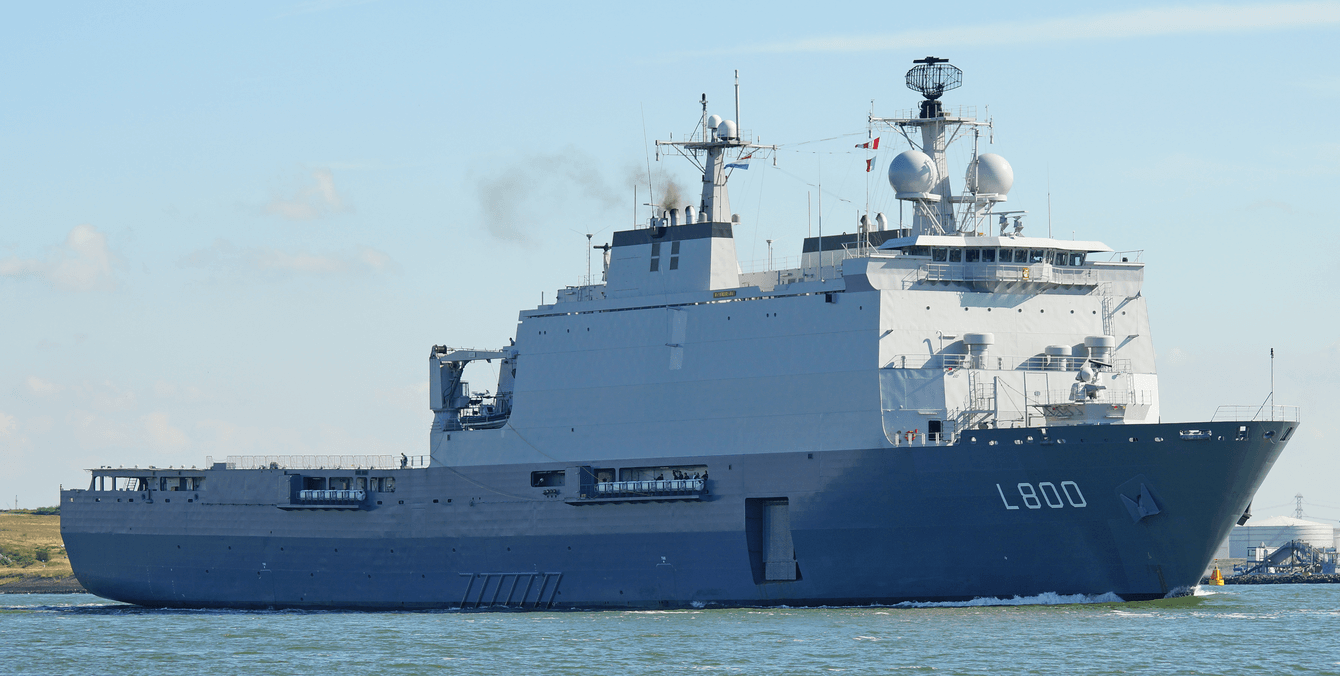
The UK Ministry of Defence published a joint statement with the Netherlands on 4 November 2026, reaffirming work on a shared Amphibious Transport Ship programme and closer defence-industrial cooperation. The ministers describe an existing partnership moving forward, rather than announce a new ship order, price or delivery date. Joint ministerial statement
UK-Netherlands ship programme remains the flagship maritime project
Key facts
- The joint Amphibious Transport Ship programme remains a central bilateral capability project.
- The ministers link industrial cooperation to investment alignment, resilient supply chains and faster adoption of technology.
- Their statement identifies NATO and the Joint Expeditionary Force as frameworks for operational cooperation.
- It sets no new contract value, ship quantity or construction deadline.
The statement is issued by British Defence Secretary Wes Streeting and Dutch Defence Minister Dilan Yeşilgöz-Zegerius. They say work on the ship programme continues and present it as an example of their industries developing a joint capability. That is a ministerial account of progress; the document does not provide a procurement milestone against which completion can independently be measured.
The underlying framework predates this announcement. The Enhanced Maritime Partnership published on 7 July called the ship programme its flagship industrial project and said capability requirements were already aligned. It described a common platform intended to preserve and modernise amphibious and littoral lift while improving interchangeability and readiness.
The July text matters because it shows what the November statement is building on. The new statement renews political support for the programme and broader industrial cooperation. It should not be read as the creation of the partnership itself or as evidence that the planned ships have entered service.
For shipbuilders and suppliers, the stated direction is closer collaboration between two national industrial bases. The ministers refer to aligning investment and strengthening supply chains, but identify no individual company award or allocation. Those commercial details would require separate evidence.
NATO, northern European security and the next programme steps
The July partnership organised cooperation around four pillars: strategic alignment, the joint ship programme, an amphibious task force and hybrid navy approach, and regional security and resilience. Its hybrid approach envisaged a mixture of crewed, uncrewed and autonomous systems alongside improved command arrangements and possible maritime air-defence cooperation.
It also placed the maritime relationship in northern Europe, the Arctic and the High North, linking it to NATO regional planning and the Joint Expeditionary Force. Protection of undersea infrastructure and seabed systems was part of that framework. These are the published strategic purposes of cooperation, rather than evidence of a newly completed deployment.
The November statement connects bilateral cooperation with support for Ukraine through Multinational Force Ukraine and maritime security through the Strait of Hormuz multinational mission. Those activities are described by the ministers as examples of their wider relationship. The statement does not announce a new deployment mandate or change the conditions for a future Ukraine mission.
Our reporting on the planned multinational exercise for Ukraine support provides the operational context for that distinction: preparations for a possible mission and political support for capabilities are separate stages.
The next verifiable developments will be specific procurement decisions, programme milestones or operational announcements. Neither statement gives a new date for those steps. Our Europe coverage follows how bilateral capability programmes contribute to European security within the Atlantic alliance.