Britain committed on 12 November 2026 to acquiring three Norwegian-programme Offshore Support Vessels for the Royal Navy's next generation of minehunting. The first is scheduled for 2031, with an option for another three. Defence ministers Wes Streeting and Tore O. Sandvik confirmed the arrangement at the Atlantic Future Forum in Oslo. The UK Ministry of Defence announcement describes ships carrying uncrewed systems to find and neutralise mines at a distance, rather than conventional minehunters entering hazardous areas.
Key facts
- The UK commitment covers three Offshore Support Vessels; an additional three are an option, not confirmed purchases.
- The first UK ship is scheduled for 2031, but the final design and full contract price have not been announced.
- Britain is participating in Norway's P1118 Standardised Vessel Programme under a government-to-government maritime partnership.
- The government cited £90 million in initial investment for the acquisition. This is not a reported total price for all three vessels.
Why the Navy needs a mothership
Traditional mine-countermeasures vessels work close to areas where underwater explosives may be hidden. The planned mothership acts as a transport, maintenance and command base for unmanned surface and underwater vehicles. Those smaller systems can search for, identify and help dispose of mines while sailors remain farther from the danger. The idea does not mean that every mine threat can be handled without crews or that the technology is already in service on these proposed ships.
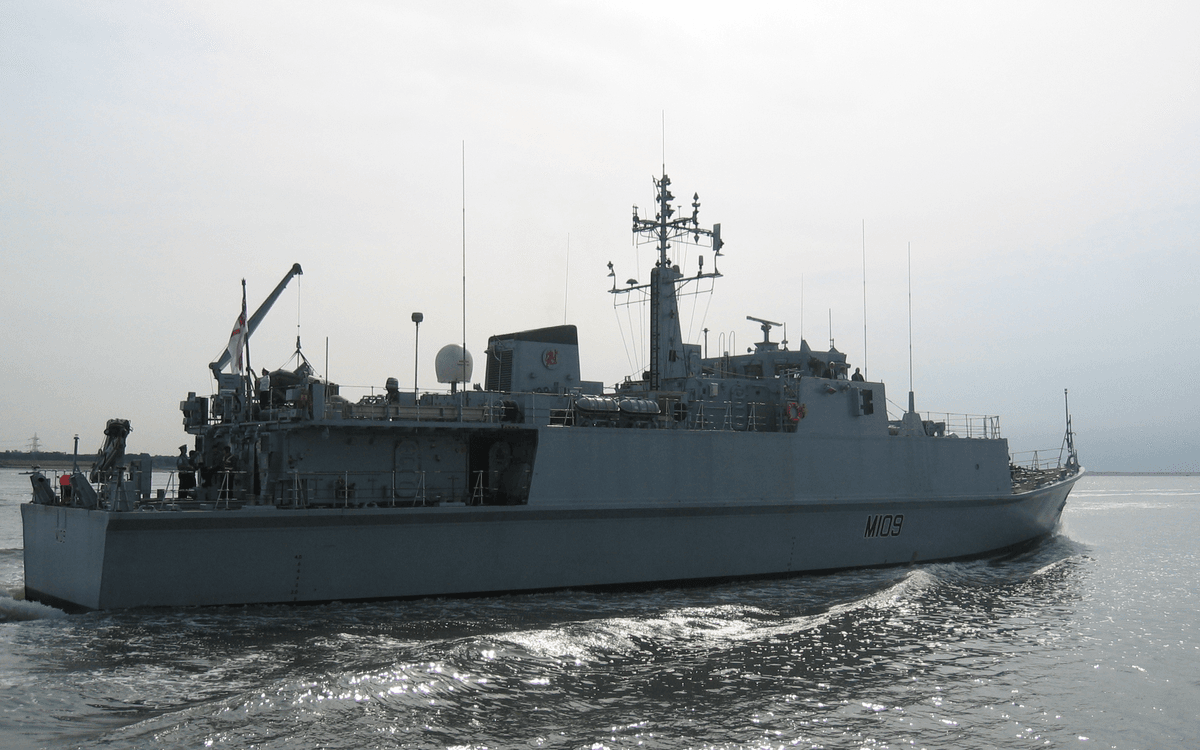
The Royal Navy has been developing this approach while reducing its fleet of Hunt and Sandown-class minehunters. A technical account by Navy Lookout describes earlier planning around large open decks, cranes, launch-and-recovery equipment and flexible space for modular sensors. Those are different requirements from a heavily armed frigate. The account also discusses design experiments intended to identify how unmanned craft and their operators could work on a crowded deck before construction decisions are made.
The ministry says the planned ships should be able to deploy globally and help protect trade routes from sea mines. That is an intended capability. A decision to join the procurement programme does not establish the resulting ships' final performance, the cost per ship or their availability before the first scheduled delivery in 2031.
What Norway contributes, and what remains separate
Norway's P1118 programme aims to develop a family of standardised naval vessels. Britain's arrangement will use the Maritime Capability Partnership Framework established between the two countries. Related vessels are expected to make training, support and operations across the two NATO allies more compatible. The precise UK variant and onboard equipment still require detailed work.
The arrangement sits alongside the separate British Type 26 frigate export deal with Norway. The UK government says that larger frigate programme supports around 4,000 jobs in the British supply chain, more than 2,000 at Glasgow shipyards. These figures are associated with the Type 26 deal and must not be presented as employment created by building three Norwegian-programme support vessels.
National Defense's reporting from the Oslo forum says the Norwegian standardised vessel designs remain in development and identifies different reference concepts. Those are not evidence that Britain has selected a 55-metre or 90-metre hull. The eventual design must fit Britain's uncrewed minehunting mission package and maritime operating needs.
The next decision points
The programme now needs a completed design, procurement and construction arrangements, followed by delivery and integration of minehunting systems. The option for three additional vessels may be exercised later but has not been converted into a firm order.
The ministry also referred to Atlantic Net, a separate £90 million underwater surveillance contract involving sensors and autonomous platforms for North Atlantic monitoring. That amount should not be confused with the initial minehunting support vessel investment or added as though it were another instalment on these ships.
For Britain and Norway, the strategic promise is that their navies will be able to operate related vessels, share experience and deploy mine-countermeasures farther from home. For commercial shipping, the relevant aim is protecting freedom of navigation by clearing hazardous waterways. The acquisition commitment, first delivery target and optional further vessels are confirmed. Total cost, final design and operational results are not yet established.