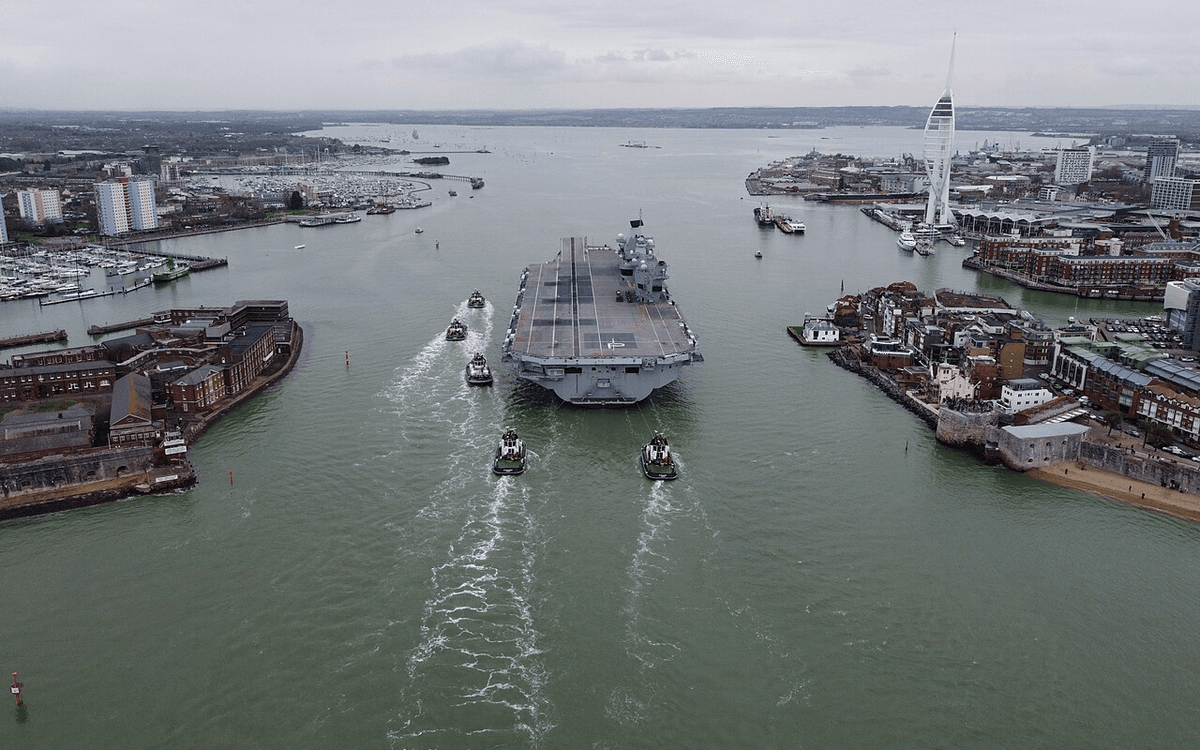
Britain and Norway used a two-day defence gathering aboard an aircraft carrier in Oslo to press for closer cooperation on North Atlantic security, critical infrastructure and military production. A joint statement published on 13 November 2026, after the Atlantic Future Forum on 11-12 November, sets out political priorities among representatives of 30 countries. It does not announce a new defence treaty, a multinational deployment order or a specified additional funding package.
The event took place aboard HMS Prince of Wales, a Royal Navy aircraft carrier that had participated in NATO's Arctic Sentry activity. The UK Ministry of Defence said more than 50 political and military leaders, officials and industry representatives joined discussions covering the North Atlantic, Arctic and High North. The forum's location was intended to give the maritime dimension of European defence particular prominence.
Key facts
- The 11-12 November event brought representatives of 30 countries to Oslo, according to the British and Norwegian co-hosts.
- Its published statement reaffirmed NATO as the foundation of collective security and encouraged greater European and Canadian contributions.
- Participants called for protection of undersea and other critical infrastructure, greater defence production and continued support for Ukraine, without setting out new binding appropriations.
- NATO Secretary General Mark Rutte spoke on 11 November, emphasising maritime routes for trade, energy and communications.
Maritime security is more than naval patrols
The Atlantic links North America and Europe through shipping routes, submarine communications systems and energy infrastructure. The ability to reinforce northern Europe in a crisis also relies on functioning ports and transport networks. Attacks on, or failures in, one of these systems can rapidly affect supplies, communication and defence readiness elsewhere.
The statement therefore connected naval power with civilian resilience, including contingency planning across government, industry and communities. It explicitly invoked international maritime law and the UN Convention on the Law of the Sea, or UNCLOS. That is an endorsement of the established legal framework, not the creation of new maritime jurisdiction or enforcement powers.
In NATO's account of his Oslo appearance, Rutte described the North Atlantic as an essential bridge between the Alliance's continents. He referred to its importance for commerce and energy, and welcomed higher military expenditure by European allies and Canada. NATO said these allies were expected to invest more than $250 billion extra in core defence in 2025 and 2026 combined. The figure is a projection attributed to NATO, not money allocated by the Oslo forum.
The co-hosts also welcomed a Northern Navies Framework signed by naval chiefs of the Joint Expeditionary Force on 10 November. That earlier agreement was presented as evidence of existing regional coordination. The subsequent forum declaration did not itself create a new fleet structure or establish rules governing military missions.
Industry, Ukraine and shared preparedness
A second element of the statement concerns the gap between strategic promises and the capacity to manufacture equipment. Leaders said industry needs signals and support to expand production and introduce new technology more quickly. They advocated opportunities for start-ups and small and medium-sized firms alongside major defence suppliers. No procurement award, grant value or contractual deadline was disclosed in the statement.
The participants also backed Ukraine's sovereignty and continuing assistance to achieve a just and lasting peace. They supported exchanging battlefield experience, especially lessons about technology, national preparedness and the protection of infrastructure. The document expresses that political position without making a separate military guarantee or authorising forces to enter Ukraine.
The Atlantic Future Forum has operated since 2018. Its own organisers describe the 2026 gathering as the eighth edition and the first hosted on mainland Europe. It is an invitation-only platform linking political, military, business and academic communities, rather than a formal decision-making meeting of NATO governments.
For the United Kingdom, the event also offered a setting to present defence-spending ambitions. NATO reported that Rutte welcomed London's announced target of spending 3% of gross domestic product on defence by 2030, describing it as a credible route toward 3.5% in core defence spending by 2035. These are future objectives discussed at the forum, not independently audited results or money newly voted there.
The next test is implementation
The measurable consequences would come from individual national budget decisions, production contracts, joint exercises and investments in resilient ports, cables or communications. Those actions require separate authorisations and should not be inferred from the co-hosts' statement alone.
The distinction matters: the Northern Navies Framework was described as already signed on 10 November, whereas the 13 November forum statement records broad agreement on priorities. Neither the statement nor the official forum account lists a schedule of new funded projects. Concrete follow-up must be checked through subsequent government, NATO and naval announcements.