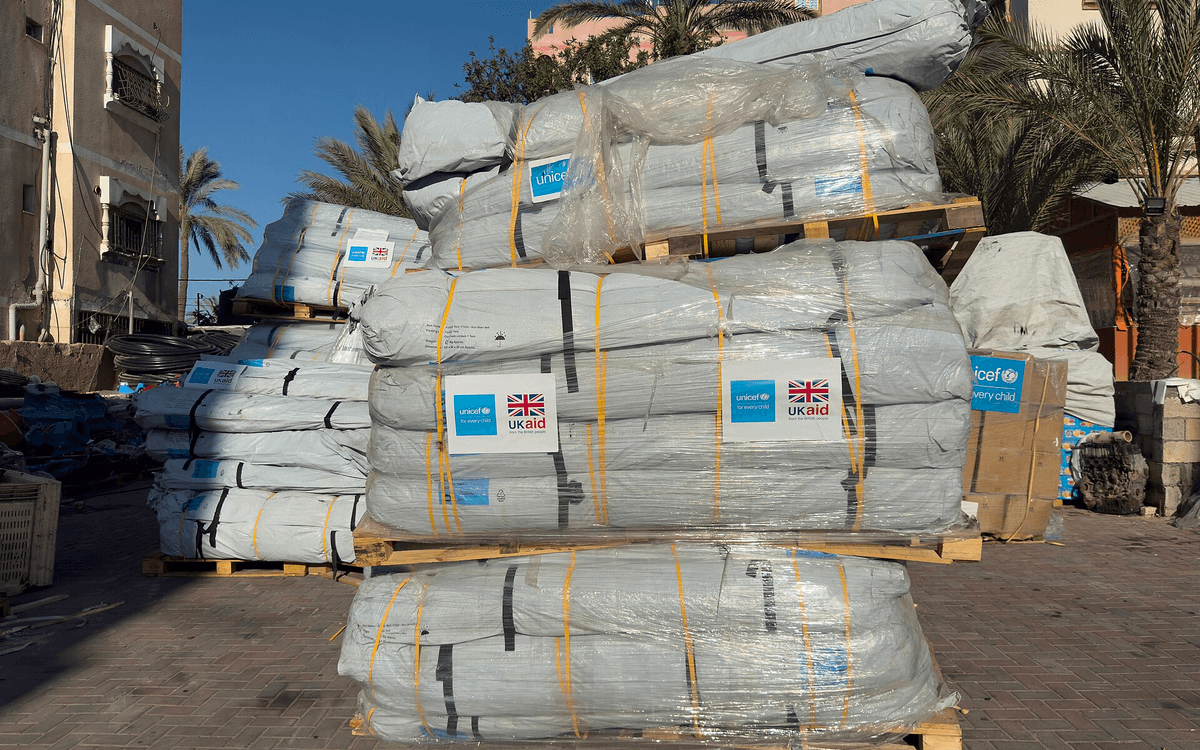
The foreign ministers of Britain, Canada, Australia and Italy called on Israel on Sunday, 15 November 2026, to allow emergency tents and other relief supplies into Gaza after heavy rainfall damaged tens of thousands of makeshift shelters. Their joint statement said 150,000 tents and other essential items were being held outside the territory. That figure describes supplies awaiting access, not aid already delivered or a new funding pledge.
The four governments urged the opening of crossings and admission of materials that can have civilian and military uses but are necessary for humanitarian operations and early recovery. They also called on all parties to respect the ceasefire and international humanitarian law. The statement is a coordinated diplomatic demand, not a newly agreed border-access arrangement: it contains no implementation timetable or confirmation that Israeli entry procedures have changed.
Key facts
- The four countries issued their joint appeal on 15 November following the first major storms of the winter season.
- UN humanitarian officials reported more than 150,000 tents outside Gaza ready for dispatch as of 8 November, including approximately 117,000 in Al-Arish.
- An OCHA report dated 13 November cited alerts involving around 46,000 households and more than 40,000 damaged shelters as of 9 November.
- The ministers demanded access for shelter supplies and essential dual-use recovery equipment, but announced no new crossing agreement.
Why tents outside Gaza are not shelter inside Gaza
The 150,000 figure has a documented humanitarian basis independent of Sunday's diplomatic wording. In its 8 November heavy-rains report, the United Nations Office for the Coordination of Humanitarian Affairs said humanitarian partners and member states had bought over 150,000 tents outside Gaza awaiting dispatch. It identified around 117,000 with the Egyptian Relief Committee in Al-Arish. The stock and delivery status can change, and the reports do not establish that every tent has been rejected under an identical entry procedure.
OCHA identified two overlapping constraints: insufficient Israeli permissions for relief shipments and equipment, and funding gaps. Even when supplies are available nearby, they still need authorised crossings, transport, personnel and access to displacement sites. Tents cannot drain sewage-contaminated floodwater or restore damaged sanitation networks. Pumps, vehicle parts, generator oil and heavy machinery are therefore part of the humanitarian access dispute, not incidental additions to the ministers' request.
The chronology matters. Heavy rain began on 6 November. By 8 November, OCHA recorded appeals from more than 26,000 households. Its subsequent 13 November report, citing Site Management Cluster figures through 9 November, put the number potentially affected at approximately 46,000 households, or 226,000 people. More than 40,000 family shelters were reported damaged, including more than 9,000 thought beyond repair. The agency explicitly treated much of this damage as preliminary, rather than a completed household-by-household census.
What the governments want to change
The diplomatic intervention focuses on the distinction between keeping a ceasefire and making relief accessible. The ministers want immediate entry of tents, fewer delays at crossings and permits for equipment needed to keep shelters and essential services functioning. Their appeal also addresses other parties' obligations under the Gaza plan and international humanitarian law, rather than assigning every logistical problem to a single actor.
The consequences extend beyond housing. In its 13 November assessment, OCHA described sewage mixed with stormwater, damaged medical facilities and interruptions to education. It counted 109 affected learning spaces and at least 5,500 children unable to attend because facilities were damaged or inaccessible as of 10 November. Those figures explain the urgency; they do not establish how many families will receive supplies following the joint statement.
For London and its partners, the document creates a common public benchmark: whether relief stocks and specialised equipment begin moving through crossings fast enough to reach families before further storms. It announces no sanctions, deployment or independently enforced deadline. The next verifiable development will be changes in crossing authorisations, transport volumes and distributions reported by aid agencies, rather than another repetition of the diplomatic demand.
Israel's management of border entry and security is central to the dispute, but the joint statement contains no fresh Israeli reply. Assessing the practical outcome will require subsequent operational reporting, including whether permissions cover dual-use machinery and whether agencies can deliver tents inside Gaza. That distinction separates the ministers' political intervention from measurable humanitarian relief.