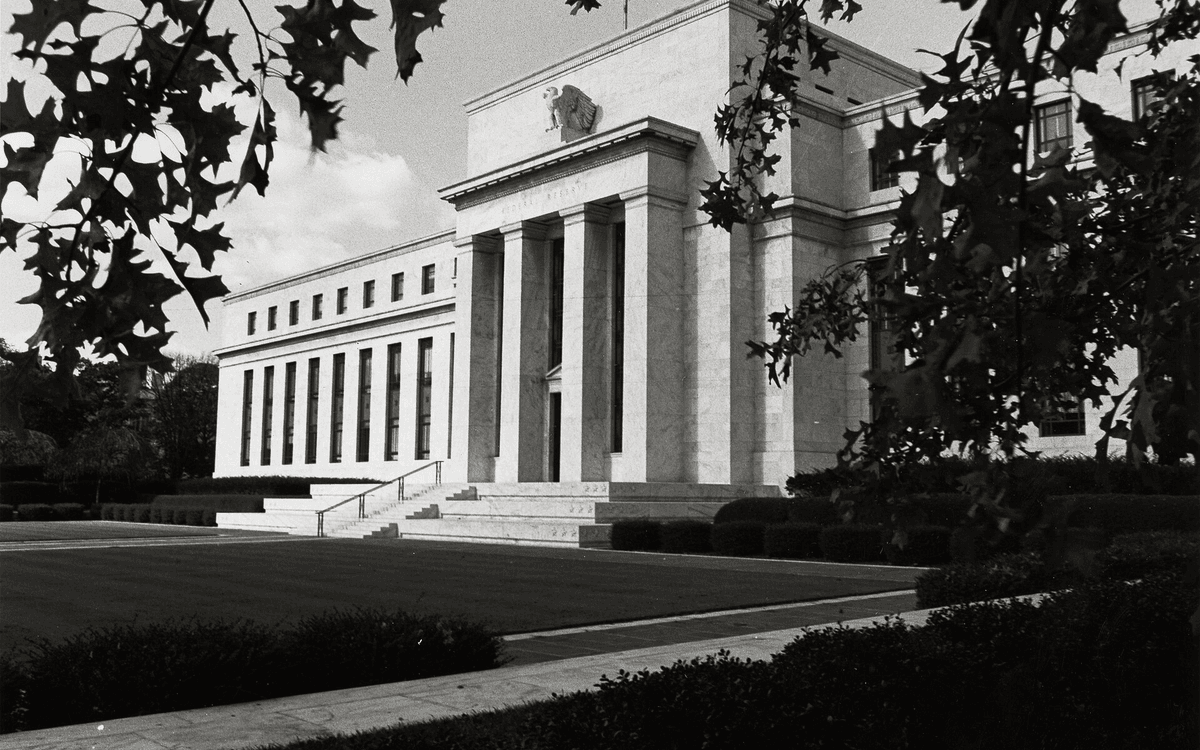
The Federal Reserve Board set new wholesale payment-service prices on 12 November 2026, effective 1 January 2027, while announcing operational changes to its check-processing network. The Board's decision projects a 1.4% average increase across established payment services and recovery of 101.5% of actual and imputed costs. These numbers describe charges to banks and credit unions for central-bank services, not an across-the-board price rise for households, a change in the federal funds rate or a ban on paper checks.
Key facts
- The average price change for mature Reserve Bank payment services is estimated at 1.4% for 2027, compared with 0.9% in the 2026 pricing announcement.
- The projected aggregate cost-recovery ratio is 101.5% for 2027, down from the 108% projection for 2026.
- A basic FedACH origination item is listed at $0.0035, while the published FedNow customer credit-transfer fee is $0.045.
- Check-processing windows will be adjusted and some institutional fees raised, but the Fed says consumers and businesses can still write and receive checks.
What the average increase measures
The Federal Reserve provides payment infrastructure to financial institutions: it processes automated clearing house transfers, operates instant payments through FedNow, handles checks and provides wholesale settlement services. The 2027 announcement covers the prices paid for those services by participating institutions. A customer using a checking account may face bank fees set separately in a retail account agreement; the Board did not announce a standard consumer fee for every check or electronic transfer.
The 1.4% is the Fed's estimate for the overall average change in prices for mature services. Individual line-item charges can increase, stay unchanged or be eligible for discounts. It therefore should not be multiplied by a bank customer's monthly account fee to predict that customer's bill. Neither should it be interpreted as the inflation rate for the economy. The release states that these scheduled prices take effect on 1 January 2027.
A comparison with the Board's December 2025 announcement explains the shift. For services beginning in January 2026, the Fed estimated a 0.9% average increase and recovery of 108% of actual and imputed expenses. Its new projection for 2027 is a larger average price increase but a lower, still above-100%, recovery ratio. The figures are forecasts for two different operating years rather than an audit establishing exactly what the Reserve Banks ultimately collected in either year.
That distinction matters because Federal Reserve pricing is governed by a statutory long-run cost-recovery principle. The expense calculation includes imputed costs and a return on equity resembling what a private firm would require. A projection above 100% in one year does not mean every service line makes a profit or that each payment type must individually recover that percentage of costs.
Why paper-check processing is changing
The Board also described a separate operational response to declining check volumes. It says fewer checks are being processed through Reserve Bank systems, although many businesses and individuals continue to use checks. The changes follow a request for public information last year and include consolidating or optimizing processing windows when volume is low, increasing certain fees charged to institutions, and related processing adjustments.
A bank that depends on late-day check exchange may have to review its operational timetable and its arrangements for depositing or collecting checks through the Reserve Banks. A credit union may need to examine vendor workflows, staffing and how its account terms absorb wholesale processing charges. These are possible operational consequences, not documented increases in a specific retail bank's checking-account fees.
The official announcement explicitly says the adjustments do not affect people's ability to pay by check or receive one. This separates the wholesale clearing system from the legal and practical existence of a check as a payment instrument. The statement provides no basis for claiming that every consumer check will be refused after the new year, or that a business must switch immediately to an instant-payment product.
Nor is the change a monetary-policy decision. Setting an overnight interest-rate target is different from setting the fee schedule charged by Reserve Banks to other financial institutions for operating payment rails. Payment-services pricing affects infrastructure cost and incentives; it does not directly announce a new rate on mortgages, savings accounts or federal borrowing.
The ACH and FedNow schedules show why line items matter
The published 2027 FedACH fee schedule lists a $55 monthly minimum for forward origination and $45 for receipt. Standard forward-or-return origination items are listed at $0.0035 each, and the surcharge for a SameDay forward item is $0.0010. These institutional rates are small per payment but can matter over substantial monthly volumes. Discount tiers make actual charges volume-dependent. A firm using a bank to pay employees generally sees the terms of its own banking contract, which are not identical to every wholesale Reserve Bank rate.
For instant payments, the 2027 FedNow schedule lists $0.045 for an eligible customer credit transfer and shows the standard monthly participation fee discounted to zero during 2027. These figures should not be confused with the separate prices that an account provider may charge its end users, if any.
The FedNow page also describes a discount programme with maximum receive-side credits of $5,000, $10,000 or $20,000 and send-side credits of $20,000, $40,000 or $80,000 depending on criteria. Those are not unconditional grants or cash payments to all banks. Receiving institutions must maintain specified fraud-management or related services, while sending institutions must opt in and satisfy transaction-volume conditions. The schedule notes that statement credits cannot exceed qualifying previously paid fees and may be reversed when conditions are missed.
These differences explain why the top-line average cannot substitute for reading the fee schedule. An institution evaluating instant payments must weigh per-item charges, volume incentives, security-service obligations and its own technology work, rather than assuming that a single reported percentage determines the business case.
What institutions should compare next
For banks and credit unions, the immediate task is to map each service they use to its applicable 2027 line item and effective date. Institutions processing checks need to review the separate changes to processing windows and fees; those offering FedNow should examine whether any conditional credits actually apply. For corporate treasurers and other bank customers, the relevant question is whether their financial institution changes its own contract, not whether the Fed has announced a consumer surcharge.
The Board has published the full schedules through Federal Reserve Financial Services, and the prices become effective on 1 January 2027. Actual volume, cost recovery and customer-level effects will be established through operations and bank decisions afterward. The reported 1.4% therefore measures a scheduled system-wide wholesale pricing adjustment, while the concrete consequences differ from service to service.