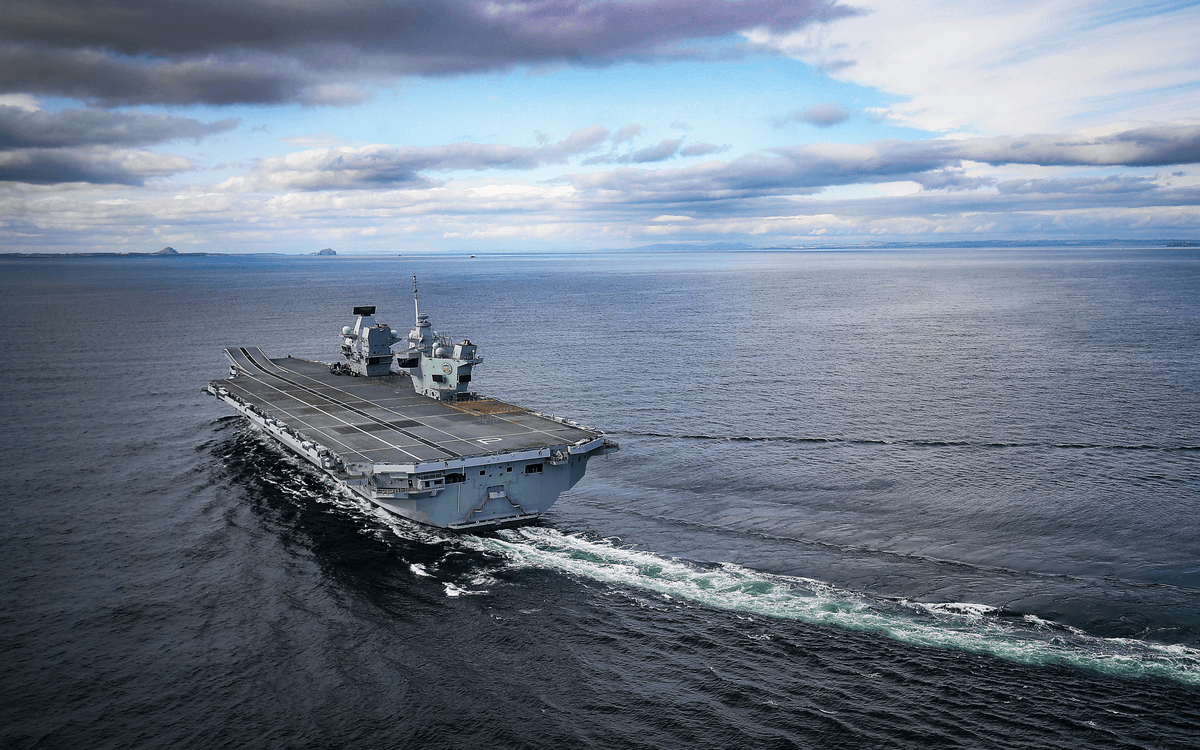
HMS Prince of Wales reached Oslo on 7 November after taking on ammunition at a Norwegian military jetty, the first time a Queen Elizabeth-class aircraft carrier has loaded ammunition outside the United Kingdom. The Royal Navy reported the milestone on 6 November. NTB and Aftenposten reported the ship’s arrival on Saturday afternoon, a day after fog forced the carrier group to turn back in the Oslofjord.
What the Norwegian port adds to Britain’s options
The carrier loaded ammunition at Hammernesodden, near Namsos, after training with Norwegian and US aircraft. The practical change is another way to replenish at least some of the stores a carrier needs while operating in northern waters. The Royal Navy identified a specific use for a port call of this kind: it could give a carrier group another option when a solid support ship is unavailable. The Royal Navy named RFA Fort Victoria and the future Resurgent-class ships as examples of the type of vessel that can provide such support.
Key facts
- The loading took place at a military jetty in Norway and was a first for the Queen Elizabeth class, which comprises HMS Prince of Wales and HMS Queen Elizabeth.
- Norwegian Home Guard personnel protected the carrier and the loading site. Their contribution included boats patrolling the fjord and positions on the jetty.
- The carrier subsequently operated off Norway in Neptune Strike 26-4, which the Royal Navy said involved 17 countries, 20 warships and 40 aircraft across three groups.
- HMS Prince of Wales is due to host the Atlantic Future Forum in Oslo on 11–12 November.
The Norwegian Armed Forces also described the resupply as a first abroad for the ship and set out Norway’s role in supporting it. The operation depended on a host country providing access to a military berth, logistical support and protection. In Oslo, Norwegian forces also announced extra personnel and security areas around the visiting warships. The Norwegian Armed Forces said the country’s aviation authority would restrict aircraft, including drones, within one nautical mile of military vessels in the inner Oslofjord, up to 3,000 feet.
How the carrier worked with US and European forces
In a separate exercise during the deployment, British F-35Bs from the carrier and land-based Norwegian F-35As escorted a US Air Force B-52. That brought together three national forces and two different operating bases for the fighters. Britain’s carrier group later formed the northern element of Neptune Strike 26-4. The other two naval groups exercised in the Mediterranean under Italy and Turkey, according to the Royal Navy.
Off Norway, the force included the British destroyer HMS Dauntless, a French frigate and the Norwegian tanker HNoMS Maud. The Royal Navy said the British aircraft practised loading and dropping live Paveway IV bombs during the NATO exercise. The exercise was part of Firecrest, Britain’s two-phase 2026 deployment to practise operating a carrier in Arctic and sub-Arctic waters. Its northern focus included the approaches between Greenland, Iceland and the United Kingdom.
The Oslo stop shifts the deployment from exercises to talks. The Atlantic Future Forum organisers say the invitation-only meeting on 11–12 November is its first on mainland Europe. The UK-led forum will bring military, government and industry participants aboard the carrier. The Norwegian Armed Forces also list the International Sea Power Conference among the events the ship will host during its visit.